



 17th September 2026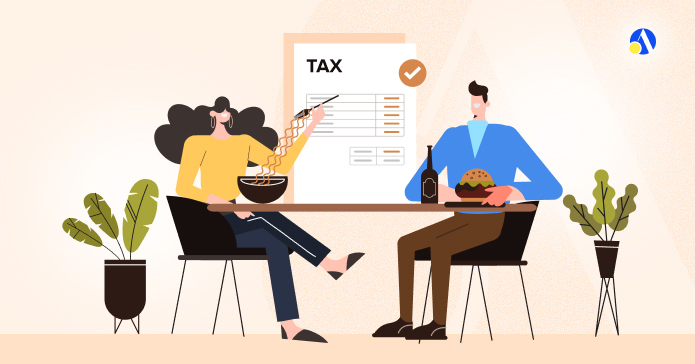
If you're a business owner, taking a client out for lunch or grabbing a meal while travelling for work often feels like a necessary part of the job. But when it comes time to file your tax return, a common question arises: Can I claim this meal as a business expense?
The answer isn't a simple yes or no. In fact, many business owners miss out on valid claims or worse, attempt to claim expenses that land them in hot water with HMRC because the rules around food and drink are notoriously complex.
Did you know that while client entertaining is almost never tax-deductible for Corporation Tax purposes, there are specific scenarios where you can reclaim VAT on employee meals? Or that you can spend up to £150 per head on an annual party tax-free?
This guide breaks down exactly
- When a business lunch is tax-deductible,
- The difference between "entertaining" and "subsistence," and
- How to legally reduce your tax bill through smart expense management.
5 Types of Lunch Expenses You Need to Know
To understand if your lunch is tax-deductible, you first need to categorise the meal. HMRC treats food costs differently depending on who is eating, where they are, and why they are there.
1. Subsistence (Meals While Travelling)
| Question | Can I claim it? |
| What is subsistence? | Meals eaten while away from your permanent workplace for business reasons. One of the most common allowable expenses. |
| The Rule | You must be outside your "normal pattern of work." |
| Example | A Bristol-based consultant travelling to London for a client meeting can claim the lunch bought at Paddington Station as tax-deductible. |
| The Catch | You cannot claim for lunch if you’re at your permanent office or during your regular commute. |
You can claim the actual cost of the meal (receipts required) or use HMRC benchmark scale rates (flat rates) if you are an employee. Have a look at this TikTok video that gives you "keeping your receipts" hackes here.
| Scenario | Can You Claim It? | Key Details |
| Business lunch with a client | No | Not deductible for Corporation Tax. |
| Meal during business travel | Yes | You can claim meals while travelling for work, such as grabbing lunch between meetings at Paddington Station. Receipts are required for reimbursement. |
| Meal at your regular office or commute | No | Meals taken during routine commutes or at your permanent office are not tax-deductible. |
| Claim methods for employee meals | Yes (conditions apply) | Claim the actual cost of the meal (with receipts) or use HMRC benchmark scale rates. |
Check out this TikTok video for a helpful hack on "keeping your receipts" to simplify the claim process here.
2. Employee Entertaining (Staff Parties)
| Question | Can I claim the cost of a staff party as a business expense? |
| The Answer | Yes, businesses can claim the cost of annual staff events, such as parties or celebrations, as a tax-deductible expense. |
| The Catch | The event must be open to all employees, and the cost must not exceed £150 per person (including VAT) annually. If the cost exceeds this limit, the entire amount becomes taxable as a benefit. |
3. Client Entertaining
Can I claim it? No (mostly).
This is the biggest area of confusion. If you take a client, supplier, or business contact out for lunch to discuss work, it is classified as "business entertainment."
| Rule | Explanation |
| Client Entertainment | Not deductible for Corporation Tax. |
| VAT on Entertainment | VAT is generally not reclaimable. |
| Why Pay Through Biz? | More tax-efficient than using personal income (salary/dividends). |
4. Office Food (Canteen Meals)
| Question | Answer |
| Can I claim it? | Yes, if meals are provided to all employees on-site (e.g., a canteen). |
| The Rule | Food must be available to all, not just directors. |
| The Scope | Covers free or subsidised on-site meals. |
5. Trivial Benefits
| Question | Answer |
| Can I claim it? | Yes. |
| What is it? | Small gifts/perks ("trivial benefits") not counted as taxable income. |
| Cost Rule | Must cost £50 or less (including VAT). |
| Restrictions | No cash allowed (vouchers are fine if non-exchangeable for cash); not a reward for performance. |
For a deeper dive into how to use this allowance effectively, check out our guide on Maximise Tax-Free Perks: Trivial Benefits Explained.
Can I Claim a Business Lunch with a Client?
The short answer: You can pay for it through the business, but you cannot deduct it from your taxable profits.
The detailed answer: When you take a client to lunch, HMRC views this as "hospitality." While you can record this transaction in your company accounts, it must be "added back" when calculating your Corporation Tax liability.
Exception - The "Quid Pro Quo": There is a rare exception known as "Quid Pro Quo." If you are providing lunch to a non-employee (like a freelancer or consultant) and it is a contractual obligation or part of their payment for services rendered, it might be deductible. However, this is a grey area, and you should consult an accountant before claiming.
Are Lunch Expenses Tax Deductible?
It depends entirely on the category of the expense:
- Subsistence (Travel): YES. Deductible for Corporation Tax and VAT (if registered).
- Staff Entertaining (Annual Party): YES. Deductible (up to £150/head).
- Client Entertaining: NO. Not deductible for Corporation Tax.
- Staff Meetings (Office): YES. Generally deductible if reasonable.
If I Can’t Get a Corporation Tax Saving, Why Don’t I Just Pay for It Myself?
This is a smart question. If client entertaining isn't tax-deductible, why bother putting it through the business?
The answer lies in Income Tax.
If you pay for a £100 client lunch from your personal bank account, you are paying with money that has already been taxed (via Income Tax and National Insurance).
If the company pays for the £100 lunch:
- The company does not get Corporation Tax relief (so it costs the company the full £100).
- However, you do not have to withdraw that £100 as salary or dividends to pay for it.
By having the company pay, you save the personal tax you would have incurred to withdraw that cash.
What Are Reasonable Meal Costs?
HMRC uses the term "reasonable" frequently, but they rarely define it with a specific number.
- Subsistence: A standard meal (sandwich and coffee for lunch, or a main course for dinner) is reasonable. Extravagant 5-course meals with fine wines while traveling may be challenged.
- Employee Meals: Standard benchmark rates for employees traveling for business are often used as a guide:
- £5 for breakfast (leaving before 6am)
- £5 for a meal (5+ hours travel)
- £10 for a meal (10+ hours travel)
- £25 for dinner (15+ hours travel/ending after 8pm)
Record Keeping and Documentation Requirements
To survive an HMRC compliance check, you need proof. "Guestimates" won't cut it.
You must keep:
- Receipts: Digital or physical copies showing the date, location, and items purchased.
- Details of Attendees: Who was there? (e.g., "Lunch with John Smith from X Corp").
- Business Purpose: Why did you meet? (e.g., "Discussing Q4 marketing contract").
- VAT Invoices: If you are reclaiming VAT, you need a valid VAT invoice.
Summary: Making the Most of Your Expenses
Navigating business lunch expenses can be tricky, but getting it right can save you money and keep your business compliant.
- Claim subsistence when travelling outside your normal routine.
- Utilise the £150 annual party allowance for staff morale.
- Use the trivial benefits rule for small treats under £50.
- Pay for client entertaining through the business to save on personal tax, even if it’s not Corporation Tax deductible.
At Debitam, we specialize in helping small businesses identify legitimate expenses they didn't know they could claim. Don't leave money on the table; ensure you are maximising your tax efficiency today.



 for seamless and stress-free
