



 25th August 2026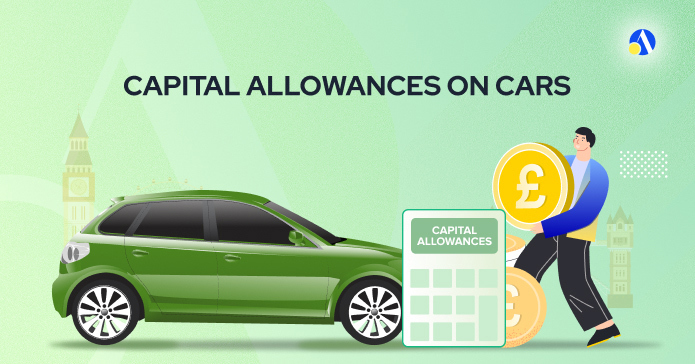
Did you know that simply choosing the right company car could wipe its entire purchase cost off your tax bill in a single year? It is entirely possible. But get it wrong, and you might find yourself slowly dripping that exact same tax relief over a decade.
We know how heavily rising costs are weighing on small businesses right now. Running a company means watching every penny, and buying a vehicle is one of the biggest investments you will make. It is completely normal to feel overwhelmed by HMRC's rules, but understanding how to properly claim your vehicle against your taxable profits is vital for your cash flow.
If you want to make smart financial decisions that protect your bottom line, you need to know exactly how capital allowances for cars work. We have broken down the jargon, removed the confusion, and outlined exactly what you can claim.
Can you get capital allowances on cars?
Yes, you absolutely can get capital allowances on cars used for your business. However, HMRC treats cars differently from other business assets like laptops or office furniture.
Most equipment you buy for your business qualifies for the Annual Investment Allowance (AIA), which lets you deduct the full cost from your profits immediately. Cars are specifically excluded from the AIA. Instead, cars qualify for either Writing Down Allowances (WDA) or a First-Year Allowance (FYA).
The amount of tax relief you get each year depends entirely on the vehicle's CO2 emissions and whether you bought it brand new or second-hand. HMRC groups cars into different "pools" to dictate how fast you can claim back the cost.
Which cars are 100% tax deductible?
If you want the maximum possible tax relief right away, you need to look at fully electric vehicles.
New and unused zero-emission cars qualify for a 100% First-Year Allowance. This means you can deduct the entire purchase price of the electric car from your business profits before you pay tax. The government introduced this generous relief to push businesses toward greener transport, and it is currently available until 31 March 2027 for Corporation Tax (and 5 April 2027 for Income Tax). Take a look if you could deduct charging EV at home from your business tax bill.
There is a catch, though. To get that 100% deduction, the car must be brand new. If you buy a second-hand electric vehicle, or a car that has previously been driven by someone else, you cannot use the First-Year Allowance. Second-hand EVs are still highly tax-efficient, but they fall into a different allowance category
How to calculate capital allowance for motor vehicle?
If your car does not qualify for the 100% First-Year Allowance, you will need to calculate your relief using Writing Down Allowances. You calculate this by applying a set percentage to the remaining value of the car each year.
HMRC assigns cars bought from April 2021 onwards into two main categories based on their emissions:
- Main Rate Pool (18%): This applies to second-hand electric cars, and any new or used car with CO2 emissions of 50g/km or less.
- Special Rate Pool (6%): This applies to any new or second-hand car with CO2 emissions over 50g/km.
Capital Allowances Rates Table
| Car Type | CO2 Emissions | Capital Allowance Rate |
| New and unused electric car | 0g/km | 100% First-Year Allowance |
| Second-hand electric car | 0g/km | 18% Main Rate Pool |
| New or second-hand car | 1g/km to 50g/km | 18% Main Rate Pool |
| New or second-hand car | Over 50g/km | 6% Special Rate Pool |
A quick calculation example
Let us say you buy a second-hand petrol car for £20,000, and its emissions are 120g/km. Because the emissions are over 50g/km, it goes into the 6% Special Rate Pool.
- Year 1: You claim 6% of £20,000, which is £1,200. You deduct £1,200 from your taxable profits. The remaining pool balance is £18,800.
- Year 2: You claim 6% of the remaining £18,800, which is £1,128. Your new balance to carry forward is £17,672
As you can see, higher emission cars take a very long time to write off for tax purposes
Pro Tip: Adjusting for private use
If you are a sole trader or in a partnership, you might use your business car for personal trips like the school run or weekend shopping. HMRC is very strict about this. You can only claim capital allowances for the business portion of the vehicle's use.
If you calculate your writing down allowance to be £1,200 for the year, but you use the car 40% of the time for personal trips, you must reduce your claim. You will only be able to deduct £720 (the 60% business use) from your taxable profits. Keeping a solid mileage log is essential to back up your claims.
What does 7k car allowance mean?
When researching company cars, you might frequently see questions about a "£7k car allowance". This creates a lot of confusion, but it is actually completely unrelated to capital allowances.
A "£7,000 car allowance" refers to a cash perk provided by an employer to an employee. Instead of giving a staff member a physical company car, the employer adds £7,000 a year to their gross salary so the employee can buy or lease their own vehicle.
Because this is a cash allowance, it is treated as standard earnings. It is subject to regular Income Tax and National Insurance through the PAYE system. Employers often offer this to avoid dealing with the complex Benefit in Kind (BIK) tax rules that apply to company cars.
Niche tips to maximise your vehicle claims
Getting your vehicle taxes right can save you thousands. Here are a few expert insights to keep in mind before you head to the dealership:
- Leasing restrictions: If you decide to lease a company car instead of buying it, capital allowances do not apply. Instead, you claim the lease payments as a business expense. Be careful, though. If the leased car has CO2 emissions above 50g/km, HMRC applies a 15% lease rental restriction. You will only be able to claim 85% of your rental payments against your profits.
- Cars versus Vans: HMRC has a very strict definition of what constitutes a "car". Commercial vehicles like vans, pickup trucks, and lorries are treated differently. Because they are commercial vehicles, they usually qualify for the Annual Investment Allowance. This means you can often deduct 100% of the cost of a van in year one, regardless of its emissions.
Key Takeaways and TL;DR
- Cars do not qualify for the standard Annual Investment Allowance (AIA).
- Brand new electric cars (0g/km) benefit from a 100% First-Year Allowance, letting you write off the full cost immediately.
- Second-hand EVs and cars with emissions of 50g/km or less go into the 18% Main Rate pool.
- Cars with emissions over 50g/km go into the slower 6% Special Rate pool.
- Sole traders must accurately split their vehicle usage and can only claim capital allowances for the business percentage.
- A "car allowance" is a salary top-up for employees, while a "capital allowance" is a tax relief mechanism for business asset purchases.
Stop Leaving Tax Relief on the Table
Managing business taxes does not have to be a guessing game. Every time a regulation changes or an emissions threshold shifts, you risk paying more tax than necessary or missing out on valuable cash-flow advantages.
That is exactly where Debitam steps in. We provide clear, fixed-fee online accounting services designed specifically for small businesses and limited companies. Our experts will identify the tax claims you might have forgotten, calculate your capital allowances perfectly, and file your corporation tax returns weeks before the deadline so you never face a late penalty.
Do not let complex HMRC rules hold your business back. Contact Debitam today and let us secure the tax relief you are legally entitled to.





 for seamless and stress-free
