



 3rd September 2026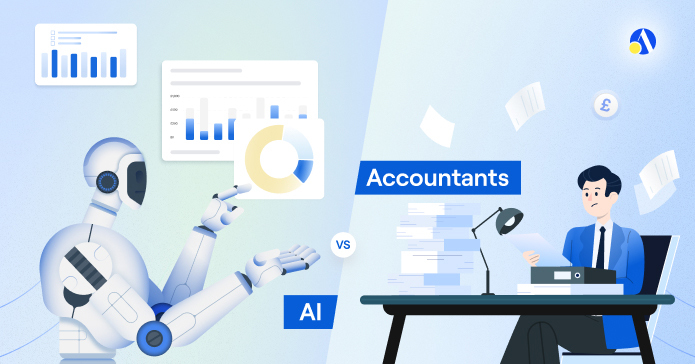
As a professional accountant, I am incredibly excited about the potential of generative AI. At our firm, we are actively exploring ways to integrate tools such as ChatGPT and Gemini to streamline our workflows, summarise data, and draft routine communications.
However, I’ve recently noticed a troubling trend: small business owners are attempting to use these tools to bypass professional tax advice entirely.
I completely understand the appeal. When you are managing cash flow and facing looming HMRC deadlines, AI feels like an instant, cheap alternative. The answers it gives often sound highly authoritative.
But when it comes to corporation tax and self-assessment, there is nothing more dangerous than "half-knowledge." Relying solely on a large language model (LLM) for your business finances is like reading a medical textbook online and attempting self-surgery. You might get the definitions right, but the application could be disastrous.
AI isn’t taking our jobs, but relying on it blindly might cost you your business. If you are weighing up a professional accountant vs AI, here are the most significant ChatGPT tax advice risks you need to know about.
1. The Prompt Trap: AI is a Mirror, Not a Mind-Reader
This is the single biggest risk of AI in accounting. An AI tool only knows what you tell it. If you ask a flawed question because you don't fully understand UK tax law or accounting terminology, the AI won't correct you. It will simply give you a perfectly formatted, confident answer based on your incorrect premise.
You cannot get the right answer if you don’t know how to ask the right question. A professional accountant identifies the blind spots you didn't even know you had, saving you from automated tax filing errors before they happen.
2. The Confidence of "Hallucinations"
The most fundamental characteristic of an AI model is that it is a language programme, not a factual knowledge base or a calculator. It is designed to produce fluent, plausible-sounding text—not necessarily the truth.
When AI models "hallucinate" (invent facts), they don't stutter or add a disclaimer. They present incorrect, outdated, or completely fabricated tax codes with unshakable confidence.
For example, a user might ask a complex question about foreign income rules. The AI might provide an answer based on US tax law while you live in the UK, or it might confidently cite an HMRC regulation from 2021 that was repealed last year. If you file your tax return based on that confidently wrong advice, HMRC will not accept "the bot told me to" as an excuse for avoiding penalties.
3. Missing Contextual Nuance
Small business tax advice isn’t just about mathematics; it’s about intent and context. This is where AI struggles the most.
Take a £200 transaction at a high-end restaurant.
- What the AI sees: Food and drink expense. It automatically flags this as a disallowable expense.
- The Reality: Was this a meeting with a high-value prospect? Was it an annual staff Christmas party (which has specific tax exemptions)? Was it a personal dinner mistakenly charged to the company card?
A professional accountant will ask you these probing questions. We apply professional judgement to ensure the categorisation is mathematically correct and legally compliant based on specific nuances in the tax law. AI defaults to generalisations, which frequently lead to incorrect filings or missed tax deductions.
4. Automating Your Own Mistakes
I often remind my clients that they don't hire us just to create financial reports or tax returns; they hire us to ensure their inputs are actually trustworthy.
Most business owners are not trained in bookkeeping, VAT returns, or payroll management. When you manage your own financial data through an automated integration with a "one-click AI" tool, you are often just automating your own mistakes.
The AI will perfectly balance a report based on fundamentally messy data. It creates a spreadsheet that looks clean and professional, giving you a false sense of security. You might look at the data and believe your business is making excellent margins, when a human review would quickly reveal that your overheads were drastically miscategorised.
5. The Accountability Vacuum
When you hire an accounting firm, you aren't just paying for filing services. You are paying for professional liability, security, and judgement.
If an AI chatbot gives you bad advice that leads to a £5,000 HMRC penalty, who pays the fine? The AI certainly doesn't. It has no skin in the game. When you work with a dedicated accountant, we stand behind our work. We navigate the grey areas of tax law where "right and wrong" aren't binary, but a matter of professional interpretation.
The New Role of the Accountant: The Pilot vs. The GPS
We are not fighting against AI for small business accounting; we are embracing it. The ideal financial workflow for a modern SME is a partnership:
- AI handles the heavy lifting: It processes data, scrapes receipts, and drafts initial financial summaries.
- The human professional applies oversight: We audit the AI's output, apply contextual judgement, guarantee HMRC compliance, and provide high-value, forward-looking strategic planning.
AI is inherently reactive—it acts like a rear-view mirror, summarising past transactions. An accountant acts as your windshield, proactively helping you shape your financial future.
By all means, use AI to educate yourself or ask for basic definitions. But when it comes to executing your financial strategy and ensuring HMRC compliance, don’t settle for the half-knowledge of a language model. Rely on the full knowledge of a licensed professional.




 for seamless and stress-free
