



 17th September 2026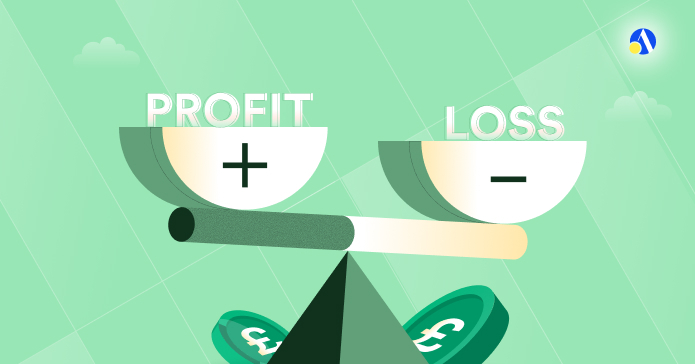
Quick answer: The break even point is the exact number of sales needed to cover all your costs, fixed and variable, leaving you with neither a profit nor a loss. Break even formula = Fixed Costs ÷ (Selling Price per Unit − Variable Cost per Unit). Everything sold beyond that point is pure profit.
Key Takeaways
| What You Need to Know | The Detail |
| What break-even means | The point where total revenue equals total costs; zero profit, zero loss |
| Break even point formula | Fixed Costs ÷ (Selling Price − Variable Cost per Unit) |
| Fixed costs | Rent, salaries, insurance; costs that don't change with sales |
| Variable costs | Materials, packaging, shipping; costs that rise with each unit sold |
| Contribution margin | What's left from each sale after covering variable costs |
| Is break-even profit? | No. Profit only starts on the very next sale after break-even |
Most business owners can tell you roughly how much they're making. Far fewer can tell you exactly how much they need to make just to stay afloat. That gap, between guessing and knowing, is where businesses hire Debitam.
The break even formula closes that gap. It tells you the minimum number of sales required to cover every cost you have, before a single penny of profit enters the picture. Whether you're launching a new product, reviewing your pricing, or trying to make sense of a slow month, this number belongs at the centre of your financial planning.
What Is Break Even Analysis?
Break even in business is the point at which your total revenue exactly matches your total costs. You haven't made a loss. But you haven't made a profit either.
Think of it as your financial floor. Below it, you're losing money. Above it, you're making it. The break-even point (BEP) is the line between the two.
Benefits of Break Even Analysis
According to the Federation of Small Businesses (FSB), break-even analysis is one of the most fundamental tools for determining whether a business model is viable.
- For small businesses operating on tight margins, it provides a clear threshold that separates sustainability from loss,
- Helping owners set realistic sales targets,
- Make smarter pricing decisions, and
- Assess whether a new product or service can genuinely pay its way. Without it, financial planning becomes little more than guesswork.
Limitations of Break Even Analysis
Break even analysis is a powerful starting point, but it does come with some important limitations worth knowing about:
- It assumes costs and prices stay fixed. In reality, variable costs can shift with supplier pricing, inflation, or order volumes, and your selling price may need to change with market conditions.
- It ignores market demand. Reaching your break-even point assumes customers will actually buy at that volume. If demand is lower than expected, the numbers won't hold up.
- It doesn't account for unexpected expenses. One-off costs, equipment failures, or economic disruptions can throw off even the most carefully calculated projections.
- It treats all products the same. If you sell multiple products or services, a single break-even figure won't capture how each one contributes differently to your costs and revenue.
- It's a static snapshot, not a forecast. Break-even analysis reflects a moment in time. As your business evolves, so do your fixed and variable costs, meaning your brea even point will too.
Break Even Analysis Example
Imagine you run a small coffee shop. Your fixed monthly costs, including rent, utilities, and salaries, amount to £5,000. Each cup of coffee you sell has a variable cost of £1.50 for ingredients, and you charge £4.00 per cup. To calculate your break even point:
- Subtract the variable cost per cup from the selling price per cup:
£4.00 - £1.50 = £2.50 (contribution margin per cup). - Divide your total fixed costs by the contribution margin:
£5,000 ÷ £2.50 = 2,000 cups.
This means you need to sell 2,000 cups of coffee each month just to cover your costs. Any sales beyond this point contribute to your profit. This simple calculation helps ensure you’re pricing correctly and selling enough to sustain and grow your business.
Used correctly, break even analysis is a valuable planning tool. But it works best when paired with regular financial reviews, cash flow forecasting, and a realistic view of your market.
What Is the Break Even Point?
The break even point is the number of units or the amount of revenue you need to generate to cover all costs for a given period. At this exact point, your net profit is £0.
There are two ways to express it:
- BEP in units: how many products or services you need to sell
- BEP in revenue: how much money you need to bring in
Both are useful. Which one you use depends on what you're trying to plan.
How Break Even Connects to Your Tax and Filing Obligations
For UK limited companies and sole traders, break-even isn't just an internal planning number; it directly touches three HMRC and Companies House obligations most competitor guides skip entirely;
VAT registration threshold
If your break even forecast shows sales volume approaching £90,000 in taxable turnover over any rolling 12-month period, you're nearing the mandatory VAT registration threshold.
Once VAT-registered, your break even calculation changes:
You'll need to decide whether to price inclusive or exclusive of VAT, and your "selling price per unit" in the formula should reflect the net (ex-VAT) figure, not the gross price customers pay.
Corporation Tax and going concern
When preparing statutory accounts for Companies House, directors are expected to assess whether the business remains a "going concern", able to meet its obligations for at least 12 months. A documented break-even analysis is one of the simplest ways to support that assessment, and accountants often ask for one during year-end accounts preparation.
Payroll costs and your fixed cost base
If you employ staff, Employer National Insurance is a fixed cost that shifts your break-even point. From April 2026, employers pay NI at 15% on salaries above the £5,000 secondary threshold, though the Employment Allowance can offset up to £10,500 of this if you're eligible. A rise in the National Living Wage (£12.71/hour for workers aged 21+ from April 2026) increases variable labour costs for hourly-paid teams, pushing your break-even point higher unless prices or margins adjust too.
Break Even Formula
Break-Even Point Formula (Units) = Fixed Costs ÷ (Selling Price per Unit − Variable Cost per Unit)
The bottom half of that formula, selling price minus variable cost, is called the break even margin. It represents what each sale contributes towards covering your fixed costs.
Here's a quick example:
| Fixed costs (monthly) | £5,000 |
| Selling price per unit | £25 |
| Variable cost per unit | £10 |
| Contribution margin | £15 |
| Break-even point | 333 units |
So, you'd need to sell 333 units just to cover your costs. Unit 334 onwards? That's where profit begins.
Is Break-Even Equal to Zero?
Yes, at the break even point, your profit is exactly £0. Not a loss, but not a gain either.
This catches many business owners off guard. You might be generating decent revenue and still not be breaking even, because your costs are eating through it. A business making £80,000 in sales can still be operating at a loss if its total costs are £85,000.
The BEP tells you the number to clear before profitability becomes real.
How Does a Break Even Forecast Help Your Business?
A break even forecast, projecting your BEP across future months or quarters, helps you:
- Set realistic sales targets based on actual cost structures
- Test pricing decisions before committing to them
- Assess new product viability before launch
- Spot financial risk early, especially when costs rise
It's not a one-off calculation. Your break-even point shifts whenever your fixed costs, variable costs, or selling price changes. Revisit it quarterly - or any time your cost structure changes.
TL;DR about Break Even Point
- Break even Point = the point where revenue covers all costs, leaving £0 profit
- Break even formula: Fixed Costs ÷ (Selling Price − Variable Cost)
- Profit only starts after the break-even point is passed
- Use it to set sales targets, review pricing, and plan ahead
How Debitam Can Help You Build a Stronger Financial Foundation?
Knowing your break even point is one thing. Keeping your accounts accurate enough to calculate it reliably is another.
At Debitam, we work with over 26,000 small business owners and limited companies across the UK, handling year-end accounts, corporation tax returns, and the day-to-day numbers that feed into decisions like this one. No jargon, no hidden fees, no last-minute panic.
If you want clear financial visibility, not just at tax time, but year-round, get in touch with Debitam today.
Frequently Asked Questions
What is Margin of Safety?
The margin of safety is the difference between your business’s actual income and the break-even point, which is the minimum amount of revenue needed to cover all expenses. It acts as a financial buffer, indicating how much sales can drop before your business begins operating at a loss. This metric is crucial for assessing financial stability and planning for potential revenue downturns.
What is Break even Ratio?
The break even ratio is a financial metric that shows the proportion of total sales needed to cover all fixed and variable expenses. Reaching this ratio means your business is neither making a profit nor incurring a loss, helping small business owners assess financial sustainability.
What does break even mean in business?
Break even in business is the point at which your total revenue equals your total costs. At this point, the business is neither making a profit nor incurring a loss. Every sale beyond this point contributes directly to profit.
How do you work out the break even point?
Use this break even point formula: Fixed Costs ÷ (Selling Price per Unit − Variable Cost per Unit). First, identify all fixed costs (rent, salaries, insurance). Then subtract your variable cost per unit from your selling price to find your contribution margin. Divide fixed costs by that figure to get your break-even point in units.
What are fixed and variable costs in break-even analysis?
Fixed costs remain constant regardless of sales volume, rent, insurance, and staff salaries are common examples. Variable costs change with each unit produced or sold, such as raw materials, packaging, and shipping. Both are required to calculate an accurate break-even point.
Is break even the same as making a profit?
No. At break even, profit is exactly £0. You've covered all your costs, but haven't made any money beyond that. Profit only begins with the next sale after the break even point is reached.
How often should I recalculate my break even point?
At a minimum, recalculate quarterly. You should also revisit it any time your fixed costs change (e.g., a rent increase), your variable costs shift (e.g., supplier price changes), or you adjust your pricing. An outdated BEP can give you a false sense of security.
Can a service business use break-even analysis?
Yes. Service businesses simply define their "unit" differently, it could be an hour of work, a single project, or a monthly retainer. The formula works the same way. Identify what one deliverable costs you to produce, set your price, and apply the standard break even formula.






 for seamless and stress-free
