

Did you know that over half of recent employee claims for homeworking tax relief were flagged by HMRC as completely ineligible?
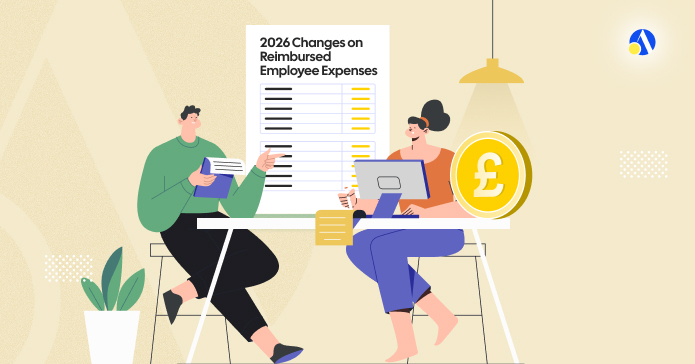
The high level of non-compliance has prompted the government to act. From 6 April 2026, the rules around what employees can claim—and what employers can reimburse—are undergoing a massive overhaul.
If you run a small to medium-sized business, dealing with HMRC regulations, P11D forms, and payroll can feel like a full-time job. You want to reward your team, keep your business compliant, and avoid paying unnecessary taxes. But when the rules change, it is incredibly easy to get caught out by unexpected liabilities. Check out how P11d works for you as a business owner, here.
This guide breaks down exactly what is changing in the 2026/27 tax year, how the new reimbursed benefit exemptions work, and how you can protect your bottom line while keeping your team happy.
What are the new tax rules for 2026?
The biggest shift for the 2026/27 tax year revolves around how minor workplace benefits and expenses are treated by HMRC.
- Historically, the tax system created a frustrating two-tier approach. If you, as the employer, directly purchased home office equipment for your staff, it was a tax-free benefit. But if your employee bought that exact same equipment and you reimbursed them, it instantly became a taxable benefit subject to Income Tax and National Insurance Contributions (NICs).
- From 6 April 2026, this rule is finally changing. The government is expanding workplace benefits relief to cover specific reimbursements, aligning them with the rules for direct employer purchases.
At the same time, HMRC is entirely abolishing the £6-per-week flat-rate homeworking tax relief for employees. Your staff will no longer be able to claim this relief directly through their PAYE tax code or Self-Assessment returns. If they want financial support for working from home, it must now come directly from you, the employer.
Which exemptions can be claimed under the new tax regime?
The upcoming Finance Bill 2025-26 introduces specific exemptions that allow employers to reimburse staff without triggering a tax charge.
These new exemptions are strictly limited to three main categories. Here is exactly how the rules compare before and after 6 April 2026:
| Benefit Category | Rule Before April 2026 | New Rule (From 6 April 2026) |
| Homeworking Equipment (Desks, monitors, office chairs) | Taxable if reimbursed by employer. Tax-free only if bought directly by employer. | Tax-free to reimburse the employee, provided the equipment is strictly for work. |
| Eye Tests & Glasses (For display screen equipment users) | Taxable if reimbursed. Tax-free only if employer pays the optician directly. | Tax-free to reimburse the employee for the test and corrective appliances needed for work. |
| Flu Vaccinations | Taxable if reimbursed. Employers had to rely on trivial benefit rules or pay directly. | Tax-free to reimburse employees who pay for their own seasonal flu jabs. |
If your team members need to buy a second monitor or get an eye test, they can now pay out of their own pocket, hand you the receipt, and you can pay them back without worrying about extra tax or National Insurance deductions.
What is the new tax-free allowance?
For the 2026/27 tax year, the standard personal allowance remains frozen at £12,570. This is the amount of income your employees (and you, if you take a salary as a company director) can earn before paying a single penny of Income Tax.
Because this threshold has been frozen for several years, rising wages and inflation mean more people are being pushed into higher tax brackets—a phenomenon known as fiscal drag. For small business owners, structuring your income efficiently through a mix of a lower salary and dividend payments remains the smartest way to optimise your personal tax position while respecting the £12,570 limit.
What is the 60% trap?
As a business owner or a high-earning professional, the "60% tax trap" is one of the most punitive quirks in the UK tax system, and it is something you need to watch out for carefully.
When your taxable income exceeds £100,000, HMRC slowly takes away your £12,570 tax-free personal allowance. For every £2 you earn over the £100,000 mark, you lose £1 of your allowance.
By the time your income reaches £125,140, your personal allowance drops to zero. Because you are paying 40% higher-rate tax on that income, whilst simultaneously losing your 20% tax-free allowance, the effective marginal tax rate on earnings between £100,000 and £125,140 is a massive 60%.
You can legally avoid this trap by making employer pension contributions or utilizing tax-efficient investments to bring your adjusted net income back below the £100,000 threshold.
What is the most overlooked tax break?
With the abolition of the employee-claimed homeworking relief, the most overlooked tax break for 2026 is the employer-paid homeworking allowance.
Because your staff can no longer claim the £6 weekly deduction themselves, they will lose out on around £125 of tax relief annually. However, HMRC still allows employers to pay a tax-free homeworking allowance of up to £6 per week (or £26 a month) directly to remote employees.
Many businesses ignore this because they assume it requires complex receipts and utility bill calculations. It does not. You can pay this flat rate to your staff tax-free without needing them to prove their specific heating or electricity costs. Offering this allowance proactively is an incredibly cost-effective way to boost employee morale and step in where the government has stepped out.
Another highly overlooked relief is the. You can gift your staff items up to the value of £50 (such as store vouchers, wine, or a hamper) completely tax-free, provided it is not cash, not a reward for their work performance, and not in their contract. Directors of close companies can even claim up to £300 per year for themselves under this rule.
Who is likely to be affected?
The 2026 changes will impact almost every modern business, but specifically:
- Employers with hybrid or remote teams: You will need to update your expense policies to reflect the new homeworking equipment reimbursement rules.
- Employees who work from home: They will notice a drop in their take-home pay if they previously claimed the £6 weekly homeworking relief via Self-Assessment, unless you step in to replace it.
- Payroll and HR departments: Internal expense claims processes will need to be streamlined to handle the influx of newly tax-free receipts for eye tests and flu jabs.
Key Takeaways and TL;DR
- Employee tax claims are ending: From April 2026, employees can no longer claim the £6/week homeworking tax relief directly from HMRC.
- Reimbursements are now tax-free: Employers can reimburse staff for eye tests, flu vaccines, and homeworking equipment without triggering Income Tax or NIC charges.
- Update your policies: Ensure your internal expense policies are updated before April 2026 to take advantage of these new exemptions.
- Beware the 60% trap: Earnings between £100,000 and £125,140 face a 60% effective tax rate due to the personal allowance taper.
- Support your staff: Consider introducing an employer-paid £6/week homeworking allowance to offset the relief your employees are losing.
Keep your payroll compliant and stress-free
Navigating tax changes, updating expense policies, and ensuring your payroll remains fully compliant can easily drain hours of your time. You started your business to follow your passion, not to decipher HMRC's latest legislative updates.
Do not let these 2026 tax rule changes catch you off guard or lead to costly compliance penalties. Debitam provides proactive deadline management, comprehensive filing support, and tailored tax insights designed specifically for UK SMEs. We help you maximise your deductions while taking the stress out of your accounting.
Contact Debitam today to streamline your tax strategy and ensure your business is fully prepared for 2026.