



 20th October 2026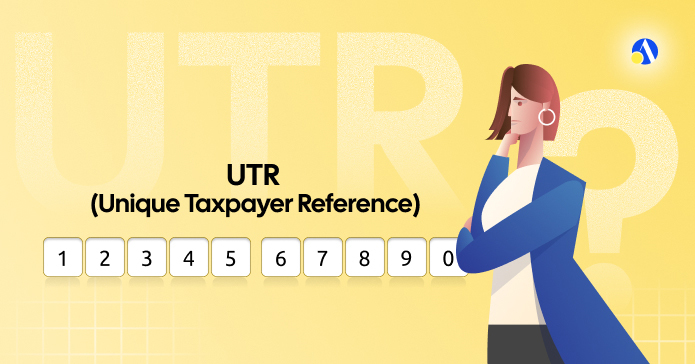
Key Takeaways
- A Unique Taxpayer Reference (UTR) is a permanent, 10-digit number issued by HMRC to identify you or your business for tax purposes.
- You must have a UTR number to file a Self Assessment tax return, register for Corporation Tax, or claim certain tax rebates.
- If you set up a limited company, Companies House automatically informs HMRC, and your company UTR number will be sent to your registered office address.
- You can find your UTR on the HMRC app, in your personal tax account, or on previous tax returns and HMRC correspondence.
- Losing your UTR can cause massive delays, but you can easily request a lost UTR online or by calling the Self Assessment helpline.
Every year, HMRC issues roughly between 500,000 and 1 million tax reference numbers, but losing yours right before the filing deadline is a nightmare that can grind your business to a halt. If you've ever spent hours on hold listening to HMRC's hold music with the average wait time on the phone with HMRC is somewhere between 13 and 20 minutes.
Whether you are just starting as a sole trader, incorporating a new limited company, or trying to figure out why your contractor is deducting 30% of your pay under CIS, getting your head around your UTR is non-negotiable.
Let's break down exactly what a UTR number is, how to get one, and what to do if yours has gone missing.
What is a UTR number?
A UTR number (Unique Taxpayer Reference) is a 10-digit code issued by HMRC to identify individual taxpayers and businesses. Every taxpayer in the UK who needs to file a return has one.
Think of it as your tax fingerprint. Just like a National Insurance number tracks your personal tax and state benefits, your UTR tracks your Self Assessment or Corporation Tax records. Sometimes, it is simply referred to as a tax reference number UK or a UTR code. You might even see it with a letter 'K' at the end of some documents.
What is a UTR number used for?
The UTR number meaning is simple: it tells HMRC exactly who you are when it comes to your tax affairs. You will need your UTR number for several crucial tasks:
- Filing your Self Assessment tax return.
- Filing a Company Tax Return (Corporation Tax).
- Registering for the Construction Industry Scheme (CIS) so you get taxed at 20% instead of 30%.
- Working with accountants (we need your UTR to act on your behalf).
- Applying for tax rebates.
If you don't have this number, HMRC cannot process your tax returns, and you could be hit with hefty late filing penalties.
How do I get my UTR number?
How to get a UTR number depends entirely on how you work.
Generally, you don't just "apply" for a UTR in isolation; you get one automatically when you register for a tax service with HMRC.
If you need to register for Self Assessment (because you earn over £1,000 from self-employment, have untaxed income, or are a company director), you can do this online via the HMRC website. You will need to create a Government Gateway account, fill in your details (name, address, National Insurance number, and business start date), and hit submit.
HMRC will then generate your unique taxpayer reference and post it to you.
How to get a UTR for your limited company
If you are setting up a limited company, the process is largely automated.
When you incorporate your business, Companies House automatically notifies HMRC. HMRC then generates a company UTR number (sometimes called a company unique taxpayer reference) and posts it to your registered office address.
This usually arrives within 15 days of incorporation. It is incredibly important to note that your company UTR number is completely separate from your personal UTR number. You cannot use your personal UTR for your limited company tax affairs, and vice versa.
How long will it take?
Normally, it takes about 10 to 15 working days for your UTR number UK to arrive by post if you are based in the UK.
If you are registering from overseas, be prepared to wait up to 21 working days (or sometimes several weeks, depending on HMRC's backlog). Because it comes by post, make sure your address details are 100% accurate when you register.
How to register your company for Corporation Tax?
Once your limited company is formed and you have received your company UTR number in the post, you must register for Corporation Tax within three months of starting to trade (doing business).
To do this, log in to your business tax account using your Government Gateway ID and add 'Corporation Tax' to your services. You will need your company UTR to complete this step. If you miss this 3-month deadline, HMRC can and will issue penalties.
How to register as self-employed with my UTR Number?
If you are already registered for Self Assessment and have a UTR, but you are starting a new self-employed business, you don't need a new UTR. Your UTR stays with you for life.
You simply need to log into your personal tax account and register your new self-employment status using your existing UTR code.
If you are registering as self-employed for the very first time, you must register for Self Assessment by the 5th of October in your business’s second tax year. The registration process itself will trigger HMRC to send you your first UTR.
How to get a UTR Number If I am Abroad?
If you are an expat or a non-UK resident who needs a UTR (for example, you are a non-resident landlord earning rental income in the UK, or you are setting up a UK limited company from abroad), you still apply the same way-either by registering for Self Assessment online or forming your company.
The main difference is the wait time. It can take up to 21 days or more for the letter to reach an overseas address. If you are forming a company, using a UK business address service (like a formation agent provides) can speed up the receipt of your HMRC mail.
How to find my UTR number?
"What is my UTR and where on earth is it?" is one of the most common questions accountants hear.
If you have lost your UTR or simply can't remember it, don't panic. You can find UTR number details in several places:
- Online: Log into your Personal Tax Account or the HMRC app.
- Paperwork: Look at previous tax returns, payment reminders, your SA250 "Welcome to Self Assessment" letter, or any notices to file from HMRC.
- Find company UTR number: For a limited company, check the original letter sent to your registered office after incorporation, or any "Notice to deliver a Company Tax Return" (CT603).
If you have scoured your files and still cannot find it, you can request a copy of your Corporation Tax UTR online, or call the Self Assessment helpline for your personal UTR. They will ask for your National Insurance number and address to verify your identity.
Personal UTR vs Company UTR
It is easy to get your numbers mixed up. Here is a quick breakdown to keep you compliant:
| Feature | Personal UTR | Company UTR |
| Who uses it? | Sole traders, freelancers, individuals with untaxed income, company directors. | Limited companies and Limited Liability Partnerships (LLPs). |
| What is it for? | Filing Self Assessment tax returns and paying Income Tax. | Filing Company Tax Returns and paying Corporation Tax. |
| How to get it? | Register for Self Assessment with HMRC. | Automatically issued by HMRC when registering with Companies House. |
| Format | 10 digits (sometimes ending in 'K'). | 10 digits (sometimes ending in 'K'). |
TL;DR
Your UTR number (Unique Taxpayer Reference) is a 10-digit code issued by HMRC. You need a personal UTR for Self Assessment and a separate company UTR for limited companies to pay Corporation Tax. You get it automatically when you register for tax or form a company. It takes about 10-15 days to arrive by post. If you lose it, check the HMRC app, your online tax account, or previous HMRC letters.
Conclusion: Let Debitam Handle the Hassle
Dealing with HMRC, tracking down UTR codes, and making sure you are registered for the right taxes before deadlines hit is exhausting. One wrong move or missed letter can lead to immediate penalties.
That is exactly where Debitam comes in. We manage the heavy lifting—from registering your business and securing your UTR number uk, to filing your Self Assessment and Corporation Tax returns accurately and on time. Don't risk HMRC fines. Let us handle your compliance so you can focus on growing your business. Reach out to Debitam today and get your tax sorted.




 for seamless and stress-free
