



 25th August 2026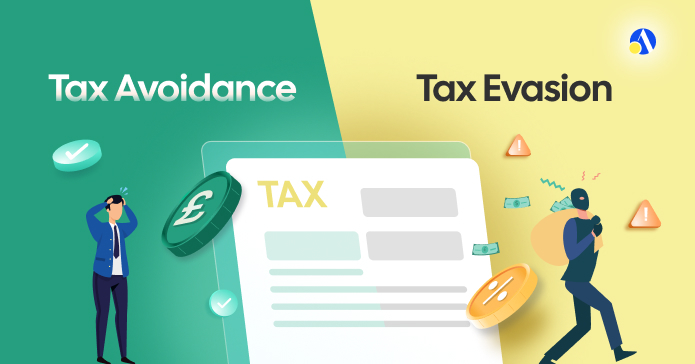
Short Answer: Tax avoidance is legal; it means using legitimate methods to reduce your tax bill. Tax evasion is a criminal offence; it means deliberately hiding income or deceiving HMRC. The difference when it comes to tax avoidance vs. tax evasion sounds simple, but the line between the two is thinner than most people realise, and crossing it can result in fines, penalties, or even prison.
In fact, HMRC secured a staggering £41.8 billion in compliance yield in a single year through targeted crackdowns on tax avoidance, evasion, and non-compliance (HMRC Annual Report and Accounts, 2023–24). That's not a small operation; that's a full-scale crackdown and it affects businesses of every size, not just celebrities or multinationals.
If you run a limited company, file a corporation tax return, or manage your own finances as a sole trader, understanding the difference between tax avoidance vs. tax evasion isn't optional; it's essential. Get it wrong — even unintentionally — and you could be facing an HMRC investigation. Watch the video, our expert is giving you a quick breakdown of 5 red flags that triggers an HMRC investigation immediately.
This guide breaks it all down: what each term actually means, where the legal boundary sits, what qualifies as each, and which one is worse. Plus, a clear comparison table so you can see it all at a glance.
Key Takeaways
- Tax avoidance is legal — it uses lawful methods to reduce your tax liability, but it can still be challenged by HMRC if it's deemed "aggressive". To see what counts as an abusive tax avoidance according to HMRC, read our guide.
- Tax evasion is illegal — it's a criminal offence that can result in unlimited fines and up to 7 years in prison, proposed 14 years (following Spring Budget 2023 proposals)
- The grey area is real — some avoidance schemes that appear legal have been shut down by HMRC and reclassified as evasion. See the full breakdown of tax avoidance vs. tax evasion here.
- HMRC wins around 9 out of 10 avoidance cases heard in court (GOV.UK)
- Small businesses are not immune — HMRC's tax gap analysis (2025) found that small businesses are responsible for 60% of the UK's annual £47 billion tax shortfall.
- Full breakdown of tax avoidance vs. tax evasion
- Tax planning is the safe middle ground — using existing reliefs and allowances correctly is both legal and encouraged. Debitam can help you minimise your tax bill in 100% legal ways, speak to us today!
What Is Tax Avoidance in the UK?
Tax avoidance means using legal methods within the tax system to reduce the amount of tax you pay. According to the UK government, tax avoidance involves "bending the rules of the tax system to gain a tax advantage that Parliament never intended"
The keyword there is bending. Not breaking; bending. It operates within the letter of the law, but not always its spirit.
What qualifies as tax avoidance?
Common examples of tax avoidance schemes in the UK include:
- Director's loans — taking money from a company without it being taxed, especially when the loan is never repaid. If you want to learn everything you need to know about Director's Loan, please read our experts' guide.
- Disguised employment — being paid as a contractor through a limited company to reduce National Insurance contributions for both parties. Paying yourself a salary as a director is a lot more complicated than you think. Take a look at our expert report on it.
- Offshore tax havens — routing income or assets through low-tax jurisdictions to minimise UK tax liability
- Contractor loan schemes — receiving pay in the form of "loans" routed through a chain of companies or trusts, so it technically avoids income tax. Paying contractors as a business owner is a minefield; this guide is here to help you navigate.
Some of these are well-known. Take the. A legal arrangement at the time that allowed wealthy individuals to pay less than 1% tax, costing the UK Treasury an estimated £168 million. Or the Icebreaker scheme and others, which HMRC later deemed "aggressive" avoidance, resulting in repayments of over £20 million.
These cases illustrate a core truth: just because something is technically legal doesn't mean HMRC won't challenge it.
Is Tax Avoidance Illegal in the UK?
Tax avoidance is not illegal in itself. However, aggressive tax avoidance can be successfully challenged by HMRC, and what starts as avoidance can end up being treated as evasion if HMRC deems the arrangements artificial or deceptive.
As the Tax Justice Network notes: "Whether an activity is legal or not often does not become clear until it has been challenged in court, and much of what gets called 'avoidance' turns out to be more like evasion."
The UK introduced a General Anti-Abuse Rule (GAAR), which prevents the use of tax arrangements that are technically legal but put in place purely to reduce tax and would not otherwise be considered a reasonable course of action. Under GAAR, HMRC has the authority to challenge and counteract such arrangements.
The GOV.UK guidance is clear: HMRC wins around 9 out of 10 avoidance cases heard in court. That should give anyone considering an avoidance scheme serious pause.
What Is Tax Evasion in the UK?
Tax evasion is a criminal offence. Full stop.
It involves deliberately hiding information, income, or assets from HMRC to avoid paying the tax you legally owe. There's no grey area here; this is dishonesty, and HMRC treats it as such.
Government estimates put the cost of tax evasion at approximately £5.5 billion per year in the UK (House of Commons Library).
What qualifies as tax evasion?
Common examples of tax evasion include:
- Under-reporting income: Telling HMRC you earned less than you actually did
- Cash-in-hand payments: Accepting payments that are deliberately kept off the books
- Hiding assets or money offshore: Moving funds to accounts or jurisdictions where HMRC won't find them
- Claiming personal expenses as business expenses: Using restaurant receipts or personal purchases as false business deductions
- Not registering for VAT when required: Deliberately avoiding the threshold to dodge VAT obligations
- Using company property for personal use without declaring it as a taxable benefit. To learn more about maximising your tax-free benefits, read our report.
The penalties are severe.
- In a magistrates' court, you can face fines of up to £5,000 or up to six months in prison.
- In the Crown Court, the maximum sentence is currently seven years' imprisonment, with the UK government having announced plans in the Spring Budget 2023 to increase this to 14 years for the most serious tax fraud cases.
Tax Evasion vs Tax Avoidance: Side-by-Side Comparison
| Tax Avoidance | Tax Evasion | |
| Legal status | Legal (but may be challenged) | Illegal — criminal offence |
| Intent | Reduce tax using loopholes | Deliberately hide tax liability |
| HMRC stance | Monitored and challenged | Actively prosecuted |
| Penalties | Repayment of tax + interest + potential surcharge | Fines, repayment + up to 14 years in prison |
| Examples | Offshore trusts, contractor loans, director's loans | Undeclared income, hidden offshore accounts, false expense claims |
| Ethical standing | Grey area — often criticised publicly | Widely condemned |
| HMRC win rate in court | ~90% | Criminal prosecution |
Which Is Worse: Tax Evasion or Tax Avoidance?
Legally speaking, tax evasion is far worse. It's a criminal offence, while tax avoidance is not. However, the real-world gap between the two is narrower than people assume.
Aggressive avoidance — the kind that uses artificial structures with no genuine commercial purpose — has repeatedly been shut down by HMRC and courts. In those cases, taxpayers have faced repayment of the full tax owed, interest, penalties, and high legal costs.
As former Chancellor of the Exchequer Denis Healey famously put it:"The difference between tax avoidance and tax evasion is the thickness of a prison wall."
If you enter an avoidance scheme and HMRC challenges it successfully, you could end up paying far more than you would have had you simply paid your tax on time. It's rarely worth the risk.
Tax Planning: The Legal Alternative
There's a third option that often gets lost in this debate: tax planning.
Tax planning means organising your finances to make the most of the reliefs, allowances, and deductions that HMRC actively provides and intends for you to use. It's not bending the rules it's using them exactly as intended.
Examples of legitimate tax planning include:
- Contributing to a pension to reduce your taxable income
- Making the most of your ISA allowance
- Structuring director salary and dividends efficiently within a limited company
- Claiming all allowable business expenses accurately
- Using R&D tax credits if you're eligible
- Making use of the Annual Investment Allowance (AIA)
The difference? Tax planning involves no deception, no artificial structures, and no grey areas. It's simply working with qualified advice to ensure you never pay more tax than the law requires you to.
Debitam is specialised in helping businesses across the UK to navigate their tax planning, keeping a healthy cash flow and avoiding all sorts of penalties that may befall your business.
TL;DR - Tax Avoidance vs. Tax Evasion
- Tax avoidance = legal but risky. Uses loopholes HMRC didn't intend. Can be challenged and reversed, with penalties.
- Tax evasion = illegal. Hiding income, lying to HMRC. Criminal charges, fines, prison.
- Tax planning = legal and encouraged. Using allowances and reliefs as intended. The smart approach.
- HMRC is better-resourced, more data-driven, and more aggressive than ever. Both avoidance schemes and evasion are in its crosshairs.
- Small business owners are not below the radar — 60% of the UK's £47 billion annual tax shortfall is attributed to small businesses.
How Can Debitam Help?
If any of this has made you nervous about whether your current tax affairs are fully compliant, that's worth acting on now, not later.
Rated 4.8/5 on Trustpilot based on over 6,000 reviews and trusted by over 26,000 UK businesses at Debitam, we help limited companies, sole traders, and small business owners stay on the right side of HMRC, every time.
From filing your corporation tax return accurately to advising on legitimate tax planning strategies, our team makes sure you're paying what you owe — and not a penny more.
Don't wait for a letter from HMRC. Get in touch with Debitam today and take the stress out of your tax affairs.
Frequently Asked Questions
Can you go to jail for tax evasion in the UK?
Yes, you can go to jail for tax evasion in the UK. Tax evasion is a serious criminal offence where individuals or businesses intentionally avoid paying the taxes they legally owe. HMRC actively investigates cases of tax fraud, and those found guilty can face severe penalties, including imprisonment. Sentences can range up to 7 years, depending on the severity of the evasion, alongside substantial financial fines and reputational damage. To avoid this, it’s crucial to ensure accurate tax filings and compliance with UK tax laws.
How do HMRC catch tax evasion?
HMRC uses advanced technology, data analysis, and information-sharing agreements to identify tax evasion. They use a powerful automation system called Connect. They monitor discrepancies in tax filings, cross-reference financial data from third parties, and analyse spending patterns. Whistleblower reports and audit triggers, such as inconsistencies or undeclared income, also alert HMRC to potential fraud.
What is the harshest penalty for tax evasion?
The harshest penalty for tax evasion in the UK can include an unlimited fine and up to 7 years of imprisonment, depending on the severity of the offense. HMRC may also impose additional financial penalties, such as charging up to 200% of the tax owed in cases of deliberate concealment or fraud. Additionally, evaders may face interest charges on unpaid taxes and the possible seizure of assets to recover the outstanding amount. These severe consequences emphasise the importance of accurate and honest tax reporting.
What is the difference between tax avoidance and tax evasion in the UK?
Tax avoidance uses legal methods to reduce your tax bill — often by exploiting loopholes. Tax evasion involves deliberately concealing income or assets from HMRC, which is a criminal offence. The core distinction is legality: avoidance stays within the law (though it can be challenged), while evasion breaks it.
Is tax avoidance legal in the UK?
Tax avoidance is technically legal, but it exists in a grey area. HMRC actively challenges avoidance schemes it deems aggressive or artificial, and wins roughly 9 out of 10 cases in court. The UK's General Anti-Abuse Rule (GAAR), introduced in 2013, gives HMRC the power to counteract arrangements designed solely to gain a tax advantage.
What are the penalties for tax evasion in the UK?
Tax evasion penalties range from fines of up to £5,000 and six months in prison (magistrates' court) to unlimited fines and up to seven years in prison (Crown Court). Following the Spring Budget 2023, the UK government announced plans to extend the maximum sentence to 14 years for the most serious tax fraud cases.
What counts as tax evasion for a small business?
Common forms of tax evasion for small businesses include: not declaring cash income, under-reporting revenue to HMRC, paying employees cash-in-hand without reporting it, falsely claiming personal expenses as business expenses, and not registering for VAT when legally required.
What is tax planning, and is it the same as tax avoidance?
Tax planning is not the same as tax avoidance. Tax planning uses HMRC-approved reliefs, allowances, and deductions exactly as Parliament intended — such as pension contributions, ISA allowances, and business expense claims. It's entirely legal and actively encouraged. Tax avoidance, by contrast, attempts to exploit loopholes that were never intended to be used in that way.
Can a small business owner be investigated for tax avoidance?
Yes. HMRC's 2025 tax gap analysis found that small businesses account for 60% of the UK's £47 billion annual tax shortfall. HMRC routinely investigates small businesses through full enquiries, targeted aspect enquiries, or random checks — regardless of whether concerns have previously been raised.
What is the GAAR in the UK?
The General Anti-Abuse Rule (GAAR) is UK legislation introduced in 2013 that allows HMRC to challenge tax arrangements that are technically legal but put in place purely to gain a tax advantage, and which a reasonable person would not consider a genuine course of action.





 for seamless and stress-free
