



 22nd September 2026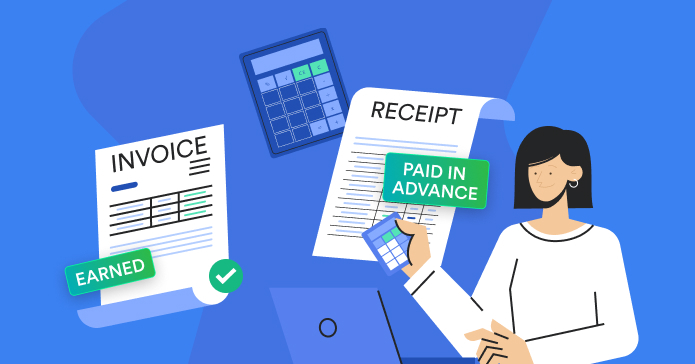
Quick answer: Accruals are revenues earned or expenses incurred that haven't been paid yet. Deferred income is money received before the work is done. Together, they ensure your accounts reflect what actually happened in a period, not just what hit your bank account. Under Financial Reporting Standard (FRS) 102, all UK limited companies must use accruals accounting.
Key Takeaways
| Concept | What Does Accruals Mean | Accruals in Balance Sheet |
| Accrued income | Earned but not yet invoiced or received | Current asset |
| Accrued expense | Incurred but not yet paid or billed | Current liability |
| Deferred income | Cash received but not yet earned | Current liability |
| Prepaid expense | Paid in advance, not yet used | Current asset |
Most business owners assume their accounts reflect what they've earned. They often don't. If your electricity bill arrives in January for December's usage, or you invoice a client in April for work done in March, your numbers are already living in two different time periods. That gap is exactly what accruals and deferred income are designed to bridge.
If you're running a limited company, HMRC doesn't give you a choice on this one. FRS 102 Section 2 Paragraph 36 requires all entities to apply the accrual basis of accounting when preparing their financial statements.
So let's break down what accruals mean properly:
What Are Accruals in Accounting?
Accruals (also referred to as accruals accounting or accrual accounting) are adjustments made to ensure that income and expenses are recorded in the correct accounting period, regardless of when cash changes hands.
Accruals mean money that has been earned or spent, but not yet received or paid.
Think of it this way. Your team works the full month of December. You pay them on 1 January. Under cash accounting, December shows no wage cost at all, which makes your profit look inflated. Under the accrual basis, those wages are recorded in December, when the work happened. That's the matching principle in action.
Under UK company law, "limited companies are required to use accruals accounting". Sole traders can use cash basis (which became the default from the 2024/25 tax year), but many opt for accruals because it paints a more accurate picture of business performance.
What Is an Example of an Accrual?
Here's a real world scenario most business owners will recognise:
Say you run a small consultancy. You complete a project for a client in March, but you don't send the invoice until April, and they don't pay until May.
Under cash accounting: no income appears until May.
Under accrual accounting: the income is recorded in March, when you earned it.
That March accrual sits on balance sheet as accrued income, a current asset representing money owed to you. Once you raise the invoice, the accrued income is cleared and replaced by a debtor (trade receivable).
Another common example: your business uses gas and electricity throughout October. The bill doesn't arrive until November. The October usage gets recorded as an accrued expense, a liability, because the cost was incurred even though no invoice has landed yet.
What Is the Difference Between Accruals and Payables?
This trips up a lot of people. Accruals and other payables sound similar, but they work differently.
| Accruals | Accounts Payable | |
| Invoice received? | No | Yes |
| Amount known exactly? | Often estimated | Yes, exact |
| Trigger for recording | When expense is incurred | When invoice is received |
| Balance sheet treatment | Accrued liabilities | Trade creditors |
Accounts payable (AP) is recorded when you receive a supplier invoice. You know the exact amount, and you've agreed to pay it within a set period, typically 30, 60, or 90 days. It's a firm, documented obligation.
An accrual, by contrast, covers costs you've already incurred but haven't been billed for yet. The amount might be an estimate.
The key difference between payables and accruals: AP has a paper trail; accruals often don't, yet.
What Are the Two Types of Accruals?
Broadly, accruals fall into two categories:
1. Accrued Expenses (Accrued Liabilities)
Costs your business has incurred but hasn't yet paid or been invoiced for. These sit on your balance sheet as current liabilities.
Common examples:
- Wages earned by staff but not yet paid
- Utility bills for services already used
- Interest on a loan that's accumulated but not yet due
- Professional fees for work, completed but not invoiced
2. Accrued Revenue (Accrued Income)
Income your business has earned but hasn't yet invoiced or received. These sit on your balance sheet as current assets.
Common examples:
- Consulting work completed but not yet billed
- Rental income earned but not yet invoiced
- Services delivered under a long-term contract, billed in arrears
Both types require adjusting journal entries: debiting or crediting the relevant income or expense account, with the offset recorded on the balance sheet.
What Is Accruals and Deferred Income?
This is where accruals and deferred income concepts come together, and where it's easy to get confused.
Accruals deal with transactions that have happened but haven't been recorded yet (no cash, no invoice).
Deferred income is the opposite: cash has been received, but the work hasn't been done yet.
| Accrued Income | Deferred Income | |
| Cash received? | No | Yes |
| Work done? | Yes | No |
| Balance sheet position | Current asset | Current liability |
| Income recognised? | Yes | Not yet |
A practical example of deferred income: a client pays you £6,000 upfront for a 12-month retainer starting in October. At your December year-end, you've only earned three months' worth of pay, £1,500. The remaining £4,500 is deferred income: a liability you carry on your balance sheet until you've delivered the service.
If you wound up the business tomorrow and hadn't done the work, you'd have to give that money back. That's why it's a liability, not income.
The double entry for deferred income:
- Dr Cash (money received)
- Cr Deferred income (liability - not yet earned)
Once the work is delivered:
- Dr Deferred income (clearing the liability)
- Cr Sales / Revenue (now recognising the income)
How to Calculate Accruals?
There's no single accruals formula, because every accrual reflects a different transaction. But the calculation always follows the same logic: work out what's been earned or incurred in the period, then subtract whatever's already been recorded.
Accrued formula - Expenses:
Accrued expense = Cost incurred during the period - Amount already invoiced or paid
Example: You've used £800 of electricity in December, but no bill has arrived. The full £800 is posted as an accrued expense for December.
Accrued formula -Income:
Accrued income = Value of work completed - Amount already invoiced
Example: You've completed £3,000 of consultancy work by 31 March, but only invoiced £1,000 so far. The remaining £2,000 is accrued income.
Quick steps to calculate an accrual:
- Identify the income earned or expense incurred in the period
- Check how much has already been invoiced, billed, or paid
- Calculate the difference
- Post the adjusting journal entry (accrued income as a current asset, accrued expense as a current liability)
This is the same matching principle at work throughout this guide: the goal is always to record income and expenses in the period they relate to, not the period the cash moves.
TL;DR on Accruals and Deferred Income
- Accruals meaning: Revenues earned or expenses incurred that haven't been paid or invoiced yet
- Accrued income: You've done the work, money hasn't arrived = it's an asset
- Accrued expense: You've used the service, bill hasn't arrived = it's a liability
- Deferred income: Cash is in your account, but you haven't done the work yet = it's a liability
- Accruals basis: Required for all UK limited companies under FRS 102
- Accruals vs payables: Payables have an invoice; accruals are estimated costs not yet billed
- How to calculate accruals: To calculate accruals, estimate the expense or income earned during the period but not yet invoiced or received, based on relevant records and agreements.
How Debitam Can Help about Accruals
Getting accruals and deferred income wrong doesn't just mess up your management accounts, it can distort your tax position and put you on the wrong side of HMRC.
At Debitam, we handle your year-end accounts, corporation tax returns, and all the adjustments that come with them, including accruals, prepayments, and deferred income. No jargon, no hidden fees. Just accurate accounts filed on time, by accountants who actually know what they're doing.
Rated 4.8/5 on Trustpilot by over 26,000 UK business owners. Get in touch with Debitam today.
Frequently Asked Questions about Accruals and Deferred Income
How do accruals affect the income statement?
Accrued expenses increase the expenses shown on your income statement, which reduces profit for that period. Accrued income increases revenue. Deferred income does not appear as revenue until the work is done, so it has no immediate income statement impact. The goal is always accuracy: your profit and loss should reflect what actually happened in the period, not what cash moved.
What does closing a pension scheme to future accruals mean?
When a defined benefit (DB) pension scheme is closed to future accruals, members stop building up any new pension entitlement from that point forward. The pension they've already accumulated is preserved and protected, but no further benefits will accrue. Employers often close DB schemes to future accruals to cap their long-term liability, replacing them with defined contribution (DC) schemes going forward.
What does multiple accruals mean in accounting?
Multiple accruals simply refers to having more than one accrual entry in your accounts, across different cost categories, departments, or accounting periods. For example, a business might carry accruals for unpaid wages, an outstanding electricity bill, and a supplier invoice not yet received, all at the same time. Each is recorded separately on the balance sheet. At year-end, it's common for businesses to review and post multiple accruals simultaneously as part of the closing process.
What does accruals basis mean?
The accruals basis (also called accrual accounting) means recording income and expenses when they are earned or incurred not when cash is received or paid. Per FRS 102 Section 2 Paragraph 36, all UK limited companies are required to prepare their financial statements on the accruals basis. This contrasts with cash basis accounting, where transactions are only recognised when money physically changes hands.
Are accruals assets or liabilities?
It depends on the type. Accrued income (money you've earned but not yet received) is a current asset. Accrued expenses (costs you've incurred but not yet paid) are a current liability. Deferred income (cash received for work not yet done) is also a current liability. Prepaid expenses (costs paid in advance) are a current asset. The adjusting journal entries for accruals always involve both an income statement account and a balance sheet account.
How old is the accruals concept?
The accruals concept, as part of double-entry bookkeeping, was first formally codified in 1494 by Luca Pacioli, a Franciscan friar and mathematician who collaborated with Leonardo da Vinci. His publication, Summa de Arithmetica, introduced the principles of double-entry accounting that underpin the accruals basis we still use today. That makes the concept over 530 years old and still the global standard for financial reporting.






 for seamless and stress-free
