


 3rd November 2026
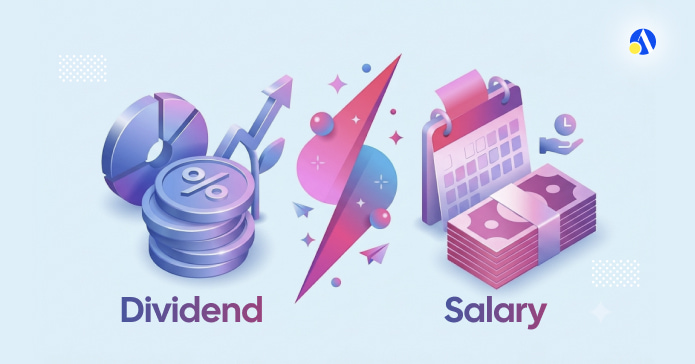
Quick answer: For most directors with no other income, the most tax-efficient 2026/27 split is a £12,570 salary plus dividends up to £50,270 total income, £37,700 in dividends. This uses your full Personal Allowance, keeps you under the higher-rate threshold, and still earns a qualifying National Insurance year.
Key Takeaways
- A £12,570 salary + £37,700 dividends (total £50,270) is the standard "optimal" split for 2026/27, per GOV.UK rates.
- Dividend tax rates rose 2 percentage points from April 2026; basic rate dividends now cost 10.75%, up from 8.75%.
- You never pay National Insurance on dividends; only on salary.
- Watch out for the "60% trap" between £100,000 and £125,140, where your Personal Allowance disappears.
- There's no legal minimum director salary in the UK, but £12,570 is widely used because it's tax-neutral.
Here's something most new directors don't realise: the moment your total income crosses £100,000, you don't just move up a tax band; you lose your tax-free Personal Allowance at a rate of £1 for every £2 earned. That can push your effective marginal tax rate to 60%.
We've sat across the table (virtually or otherwise) from plenty of contractors who've been caught out by this, so let's break down exactly how salary and dividends work together in 2026/27, no jargon, just the numbers.
Is it better to take dividends or salary in the UK?
For most owner-directors, a mix of salary and dividends works best. Here's how each one stacks up:
- Salary: It's a deductible business expense, so it reduces your Corporation Tax bill and builds your State Pension record. The trade-off? It attracts both Income Tax and National Insurance (NI).
- Dividends: They're paid from post-tax profit, so they carry no NI and are taxed at lower rates than salary.
That's why a small salary topped up with dividends is the go-to structure for most contractors.
How much do I need to make £100K a year in dividends?
Here's the short version of what it takes to take home £100,000 in dividends:
- Pre-tax profit needed: Roughly £131,000. That leaves £100,000 after Corporation Tax (using 2026/27 marginal relief).
- Salary: £12,570.
- Total personal income: £112,570, which lands you in the 60% trap zone.
- Estimated personal tax: Roughly £29,000–£30,000.
Worried about the numbers? This is a complex calculation, so talk to an accountant before you plan around it.
What is the 60% trap?
Once your income passes £100,000, you start losing your Personal Allowance. Here's how it works:
- The trigger: Between £100,000 and £125,140, you lose £1 of Personal Allowance for every £2 you earn, on top of normal tax.
- On salary or other non-dividend income: The effective marginal rate is 60%.
- On dividends: The effective marginal rate is closer to 53.6%.
Want to stay out of the trap? The most common ways to reduce your taxable income are:
- Pension contributions: Paying into a pension lowers your adjusted net income.
- Gift Aid donations: Charitable gifts also reduce the income HMRC counts.
- Retaining profit in the company: Leaving money in the business means it isn't taken as personal income.
Is it better to earn £50k or £55k?
Yes, you'll always take home more by earning more. But the extra £5,000 isn't taxed the same way on either side of the £50,270 higher rate threshold:
- Below £50,270: Dividends are taxed at 10.75%.
- Above £50,270: The rate jumps to 35.75%.
What does that mean for you? If an extra £5,000 of dividends straddles that threshold, you'd keep roughly £3,280 of it.
Do you pay National Insurance on dividends?
No, you don't pay NI on dividends, full stop. That's the entire reason the salary-plus-dividend strategy exists. Salary attracts Income Tax and NI; dividends only attract dividend tax.
How much tax do I pay on dividends?
For 2026/27: the first £500 is tax-free (Dividend Allowance), then 10.75% in the basic rate band, 35.75% in the higher rate band, and 39.35% above £125,140.
| Band | Dividend tax rate 2026/27 |
| Up to £500 | 0% |
| Basic rate (to £50,270 total income) | 10.75% |
| Higher rate (£50,271–£125,140) | 35.75% |
| Additional rate (over £125,140) | 39.35% |
How much dividend can I pay myself?
You can pay yourself as much in dividends as your company has in distributable profit, which is the profit left after Corporation Tax. There's no fixed cap, but you do need to follow a few rules:
- Check your profits first: Only pay dividends from profit that's available after Corporation Tax.
- Keep board minutes: Record each dividend decision in writing.
- Issue a dividend voucher: You'll need one for every payment.
What happens if you pay dividends without enough profit?
If your company doesn't have enough distributable profit to cover a dividend, HMRC can reclassify the payment. Depending on the situation, it may be treated as either:
- An illegal dividend: You may have to repay the money to the company, and it could be treated as an unlawful distribution.
- A director's loan: The payment is recorded in your director's loan account, which can trigger extra tax and paperwork if it isn't repaid in time.
Example: Say your company has £10,000 in profit after Corporation Tax, but you pay yourself £15,000 in dividends. The extra £5,000 isn't backed by profit, so HMRC could treat it as a director's loan. If that loan is still outstanding nine months after your company's year end, the company may owe a 35.75% tax charge on it (this is the s455 charge), and you'll need to report it on your Self Assessment tax return.
How to avoid it:
- Check your profit after Corporation Tax before every dividend.
- Keep board minutes and a dividend voucher for each payment.
- If you've paid too much, repay the difference promptly and speak to your accountant.
What's the minimum director salary in the UK?
There isn't one. Directors are office holders, not automatic employees, so the law doesn't require you to take any salary at all.
That said, most accountants recommend £12,570. Here's why:
- It matches the full Personal Allowance, so you pay no Income Tax on it.
- It's usually enough to keep your National Insurance record up to date.
- It's deductible for Corporation Tax, which lowers your company's profit bill.
What's the most tax-efficient way to pay yourself as a director?
For most sole directors, the sweet spot looks like this:
- Salary: Take £12,570. It costs around £1,136 in employer NI, but you'll save more than that in Corporation Tax.
- Dividends: Top up to £50,270 in total income, so you stay within the basic-rate band.
- Above £50,270: Employer pension contributions are usually more tax-efficient than higher-rate dividends.
Do I have to pay myself a salary as a director?
No, but skipping salary entirely means missing out on NI qualifying years for your State Pension and the Corporation Tax deduction it provides.
TL;DR
- The benchmark split: A £12,570 salary plus £37,700 in dividends is the tax-efficient split for 2026/27.
- Dividends and NI: Dividends never attract NI, but they now cost more in tax than they did last year.
- The £100,000–£125,140 trap: Keep an eye on this income band, because it's where the tax bill can catch you out.
- Not personal advice: Your sector, profit level, and other income all change the maths, so treat these figures as a guide.
- Budget updates: Always check for changes following the 28 October 2026 Budget.
Numbers you're staring at that don't quite add up? That's exactly what we're here for. Debitam's qualified accountants handle:
- Director salary and dividend planning
- CIS returns
- Self Assessment
We do this every single day, and we don't do guesswork. Call us on 020 3960 5080 or head to debitam.com before your next dividend payment goes out.
Get Your Director Salary and Dividend Split Right Today: Speak to an Accountant
When it comes to navigating taxes, precision isn’t optional, it’s essential. Debitam makes it effortless with expert accountants who specialize in CIS returns, Self Assessments, and more. With a 4.8 Trustpilot rating, we're trusted by +26,000 across the UK to keep their finances compliant and stress-free. Say goodbye to tax worries-Debitam has your back. Call us at 020 3960 5080 or visit debitam.com today!
Frequently Asked Questions
Dividend tax is usually paid through your Self Assessment tax return. For the 2026/27 tax year, which ends on 5 April 2027, the return and the payment are due by 31 January 2028. The company does not deduct tax from dividends before paying them to you, so set money aside as you go.
Most company directors file a Self Assessment return, and dividend income is reported on it. Even if your dividends sit within the £500 Dividend Allowance, you may still need to file as a director. Check your position with an accountant or on GOV.UK.
There is no legal limit on how often you can pay dividends. You can pay them monthly, quarterly or once a year, as long as the company has enough distributable profit each time. Every payment needs its own board minutes and dividend voucher.
Yes, if they own shares in the company. Dividends are paid in proportion to shareholdings, so your spouse can use their own Personal Allowance and basic-rate band. HMRC's settlements rules can apply if the shares exist mainly to reduce tax, so take advice before changing who owns the shares.
Dividends are treated as the top slice of your income. Your salary and any other income use up your Personal Allowance and basic-rate band first, and your dividends are taxed on top at the 10.75%, 35.75% or 39.35% rates, depending on which band they fall into.
Generally, no. A company where the director is the only employee paid above the secondary threshold cannot claim Employment Allowance. This is why a director's salary may still create an employer National Insurance cost that the allowance does not offset. An accountant can confirm whether your company qualifies.



 for seamless and stress-free

