



 1st September 2026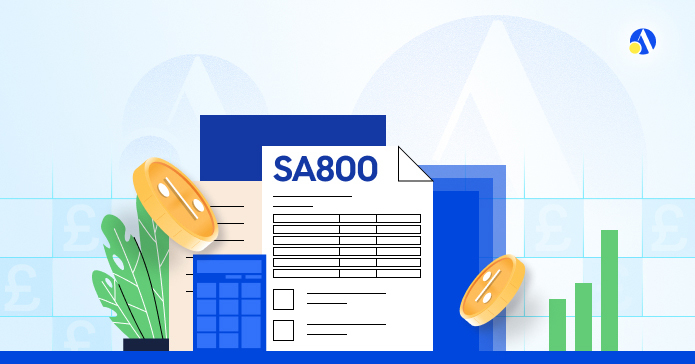
Quick answer: The SA800 is the tax return every UK partnership files with HMRC each year to report income, expenses and how profits are split. The partnership pays no tax itself. Deadlines are 31 October (paper) and 31 January (online) after the tax year ends. Miss it, and every partner is fined.
Key Takeaways
| Point | What you need to know |
| What it is | The SA800 is HMRC's Partnership Tax Return — an information return, not a tax bill. |
| Who files | One nominated partner submits it, but all partners are jointly liable. |
| Who pays tax | The partnership pays nothing. Each partner is taxed individually on their profit share. |
| Deadlines | 31 October (paper), 31 January (online) following the tax year. |
| Penalties | £100 per partner immediately, rising with daily and percentage charges. |
| The catch | You can't file the SA800 through HMRC's free online service — you need commercial software or a paper form. |
| Basis Period Reform | From the 2024/25 tax year, partnerships are taxed on profits earned in the tax year (6 April–5 April) rather than their accounting period |
Here's something most people find out the hard way: HMRC's free online Self Assessment service does not let you file a partnership tax return. As the Low Incomes Tax Reform Group confirms, "It is not possible to complete and file a partnership tax return using HMRC's free online service." Your only options are to buy commercial software or fill in a paper form and post it. That single fact trips up thousands of partnerships every year and it's why so many leave filing to the last minute and get stung. Hiring a professional accountant when filing a partnership tax return is paramount. Debitam would save you hundreds of pounds and time. Talk to your accountant now.
If you run a business with one or more partners, the SA800 is unavoidable. But it doesn't have to be stressful. Below, we'll walk through exactly how the partnership tax return works, who has to file it, how tax is actually calculated, and crucially the deadlines you can't afford to miss. Let's get into it.
How does a partnership tax return work?
A partnership tax return (form SA800) is a formal declaration of your partnership's income, expenses, and how profits or losses are divided between the partners for a given tax year.
Here's the part that catches people out: the partnership itself pays no tax. UK partnerships are "tax transparent," which means HMRC looks straight through the business to the individual partners. The SA800 simply reports the numbers and splits them up. Each partner then declares their share on their own Self Assessment return (SA100 with the SA104 partnership pages) and pays income tax and National Insurance on it personally.
Think of the SA800 as the master document. It says who earned what, and how the pie was sliced. The individual returns are where the actual tax gets paid.
Does a partnership have to submit a tax return?
Yes. If HMRC issues a notice to file, the partnership must submit an SA800 even if it made a loss or had barely any activity that year.
There's no wriggling out of it. Every UK partnership operating with a view to profit has to file, and a separate return is needed for each accounting period ending in the tax year. Ignoring the notice doesn't make it disappear; it just triggers penalties for every partner.
Who must file a partnership tax return?
The SA800 applies to a wide range of business structures. You must file if you operate as any of the following:
- General partnerships: two or more people running a business together
- Limited partnerships (LPs): with both general and limited partners
- Limited Liability Partnerships (LLPs): taxed as partnerships
- Mixed member partnerships: where some partners are companies or non-residents
- Investment partnerships: reporting savings and investment income One partner is appointed as the nominated partner.
How does tax work on a partnership?
Since the partnership pays no tax, everything flows down to the partners based on the profit-sharing ratio in your partnership agreement. Each partner pays income tax plus Class 4 National Insurance on their share. Class 2 National Insurance is no longer a compulsory contribution for self-employed people from 6 April 2024, although voluntary contributions may be possible in certain circumstances.
Here's a worked example
Example: Andrea, Bronagh and Cerys run a partnership called ABC, splitting profits 50:25:25. In 2025/26, the partnership made £37,500 in taxable profit.
| Partner | Profit share | How it's calculated |
| Andrea | £18,750 | £37,500 × 50% |
| Bronagh | £9,375 | £37,500 × 25% |
| Cerys | £9,375 | £37,500 × 25% |
- Andrea, the nominated partner, files the SA800 showing these figures.
- She then passes the details to Bronagh and Cerys so each can report their share on their own tax return.
- Andrea's own bill, with £18,750 as her only income, comes to £1,236 in income tax plus £370.80 in Class 4 NICs; £1,606.80 in total.
- Bronagh, below the personal allowance, owes nothing.
- Simple in principle, but easy to get wrong if the profit split doesn't match your agreement.
When to file a partnership tax return?
The deadlines are strict, and they mirror the personal Self Assessment dates. Here's what you're working with:
| Filing method | Deadline (after tax year end) | Example: 2025/26 return |
| Paper | 31 October | 31 October 2026 |
| Online | 31 January | 31 January 2027 |
If HMRC issues the notice to file after 31 July, you get three months from the notice date instead. Partnerships with only corporate partners follow different, longer deadlines.
Now for the penalties, and this is where partnerships really feel the pain. Because the £100 penalty hits every partner, not just the nominated one.
Here's how late filing penalties stack up, per HMRC:
| How late | Penalty (per partner) |
| Missed the deadline | £100 fixed penalty |
| Over 3 months | £10 per day, up to £900 |
| Over 6 months | Further £300 fixed penalty |
| Over 12 months | Further £300 fixed penalty |
A three-partner firm filing more than 12 months late could face up to £4,800 in combined late-filing penalties - £1,600 per relevant partner - before any separate tax liabilities of the individual partners are considered.
What is basis period reform and how does it affect partnership tax returns?
Since the 2024/25 tax year, all partnerships are taxed on profits made in the actual tax year 6 April to 5 April, rather than whatever accounting period the partnership uses. If your partnership already draws its accounts to 31 March or 5 April, this doesn't affect you. If it doesn't, here's what changed and what to check before you file.
The one-off transition year (2023/24)
2023/24 was a single transitional year that realigned every non-April year-end onto the tax-year basis. Partnerships with accounting dates other than 31 March or 5 April had to calculate:
- Standard part: profits for the normal 12-month accounting period ending in 2023/24
- Transition part: extra profits from the end of that period through to 5 April 2024
- Minus any overlap relief brought forward from an earlier change of accounting date
The result is the "transition profit," and it's taxed differently from normal trading profit.
Transition profits are spread over 5 years
Rather than taxing the full transition profit in one go, HMRC spreads it automatically over five years, 2023/24, 2024/25, 2025/26, 2026/27 and 2027/28, at roughly 20% a year. Partners can elect to bring forward more of it, but not less.
That means SA800s filed through 2027/28 for affected partnerships carry two components of profit each year: normal trading profit for that tax year, plus a slice of the spread transition profit. This is easy to miss, since the headline profit figure won't flag it — it's one of the most common errors we see on partnership returns right now.
Overlap relief: use it or lose it
If your partnership had overlap relief from an earlier change of accounting date, it should have been used in full against the 2023/24 transition part. Overlap relief not used by then is gone, it can't be claimed later. If you're unsure whether your partnership had any, HMRC has an online request service that can confirm the figure.
Does this affect your partnership?
- Accounting date of 31 March or 5 April: no impact, you're already on the tax-year basis
- Any other accounting date: you went through the 2023/24 transition and are still partway through the 5-year spread
- New partnerships formed after 6 April 2024: taxed on the tax-year basis from day one, no transition needed
If your year-end doesn't match the tax year, get your transition profit and overlap relief figures checked before filing.
TL;DR on Partnership Tax Return
- The SA800 is the partnership tax return every UK partnership files with HMRC.
- The partnership pays no tax, each partner is taxed individually on their profit share.
- One nominated partner files, but all partners are jointly liable.
- Deadlines: 31 October (paper), 31 January (online) after the tax year.
- You can't use HMRC's free online service, you need commercial software or a paper form.
- Late filing means a £100 penalty for every partner, rising sharply the longer you wait.
- Basis Period Reform: From 2024/25 onwards, HMRC taxes partnerships on profits earned within the tax year itself, rather than the partnership's own accounting period.
Don't let the SA800 catch you out
The partnership tax return isn't complicated, but it's unforgiving. One missed deadline, one mismatched profit split, and every partner pays for it. Why risk it?
At Debitam, we handle partnership accounts and SA800 filing from start to finish, accurate, compliant, and always on time. Rated by over 6,200 customers, we take the stress off your plate so you can focus on running your business.
Get in touch today and keep calm and file on with Debitam.
Frequently asked questions about Partnership Tax Return
What is the difference between an SA800 and an SA104?
The SA800 is the return filed by the partnership as a whole, showing total income and how profits are split. The SA104 is completed by each partner on their personal Self Assessment (SA100) to report their individual share of those profits.
Can I file a partnership tax return online for free?
No. HMRC's free online Self Assessment service doesn't support the SA800. You'll either need to buy commercial software recognised by HMRC or file a paper return by 31 October.
Who is responsible for filing the SA800?
The nominated partner submits the return on behalf of the partnership. However, all partners are jointly responsible for its accuracy and share liability for any penalties.
What happens if the partnership tax return is late?
HMRC automatically charges a £100 penalty to each partner. After three months, daily penalties of £10 (up to £900) apply. A further £300 penalty can apply at six months, followed by another £300 penalty at 12 months.
Does the partnership pay any tax on the SA800?
No. The SA800 is an information return only. Each partner pays income tax and National Insurance on their share of the profits through their own Self Assessment return.
How much does it cost to file a partnership tax return?
Costs vary depending on your partnership's complexity and whether you use software or an accountant. Commercial software carries a fee since HMRC's free service isn't an option, and using a professional service like Debitam gives you a transparent quote based on your specific needs.
What is basis period reform and does it affect my partnership?
From the 2024/25 tax year, partnerships are taxed on profits earned in the tax year (6 April–5 April) rather than their accounting period. Partnerships with a 31 March or 5 April year-end aren't affected. Others went through a one-off transition in 2023/24, and any resulting "transition profit" is being spread across their SA800s over five years, through to 2027/28.



 for seamless and stress-free
